7 Indoor Plants That Can Thrive When Their Roots Are Snug
7 Houseplants That Don’t Mind Being Root-Bound
Most indoor plants eventually need more room, but that doesn’t mean every houseplant needs a bigger pot as soon as its roots become crowded. Some varieties actually perform well when their roots have limited space.
A slightly snug pot can sometimes encourage flowering, help control moisture, or simply slow down overly vigorous growth. The important thing is knowing which plants prefer this setup and recognizing when they genuinely need fresh soil or a larger container. (Better Homes & Gardens)
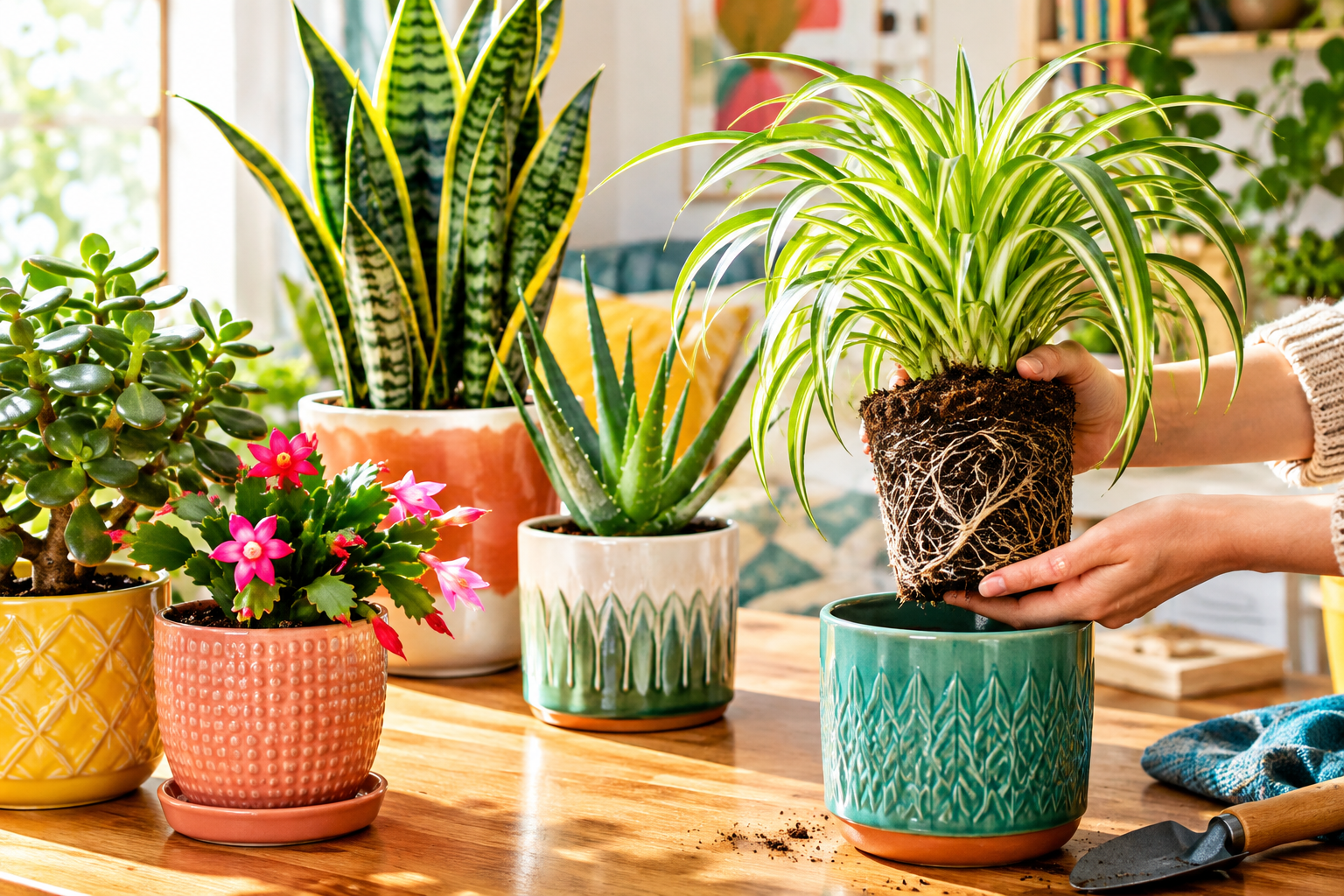
1. Spider Plant
Spider plants are quick growers, yet they can be surprisingly comfortable in a somewhat crowded container. A little root restriction may even encourage them to flower and produce baby plants.
Instead of automatically upgrading the pot, check whether roots are coming through the drainage holes or the plant has become noticeably too large for its container.
2. Hoya
Hoyas have relatively small root systems and generally grow at a slower pace. Because of this, they often don’t need frequent repotting.
When you do move a hoya, be gentle. Its stems can be delicate, and replacing worn-out potting mix with fresh, nutrient-rich soil can be more useful than simply choosing a much larger pot.
3. Snake Plant
Snake plants are among the easiest indoor plants to keep in the same container for a long time. Their slow growth means they usually don’t need a new pot every year.
A well-draining cactus or succulent-style mix works well, while a sturdy pot can help keep taller plants from tipping over. Repot when the soil has deteriorated or the plant becomes unstable rather than simply because time has passed. (Better Homes & Gardens)
4. Christmas Cactus
Christmas cactus can actually flower nicely when its roots are a little crowded. There’s no need to give it a huge new container.
When repotting becomes necessary, choose a pot only slightly larger than the previous one. Moving it after flowering has finished is generally a good opportunity to refresh its growing conditions. (Better Homes & Gardens)
5. Chinese Money Plant
Chinese money plants can grow quickly, but they don’t necessarily require constant pot upgrades. One thing to watch for is the appearance of baby plants around the parent.
Those little offshoots can be separated and given their own containers when they have developed enough roots, helping prevent the main pot from becoming overcrowded.
6. Jade Plant
A jade plant doesn’t always benefit from having lots of extra soil around its roots. Keeping it slightly snug can help moderate moisture and prevent the plant from becoming excessively large or top-heavy.
Consider repotting when the potting mix has broken down, water passes through unusually quickly, or the plant has become difficult to manage in its current container. A heavy, well-draining pot is a good choice for larger jade plants. (Better Homes & Gardens)
7. Aloe Vera
Aloe plants have relatively shallow root systems, so they can stay in the same container for quite a while. They usually need a larger pot only when the soil quality declines, drainage changes, or new offsets begin filling the container.
If your aloe produces baby plants, repotting is also a good chance to separate them and grow new plants in their own containers. (Better Homes & Gardens)
When Should You Actually Repot?
Being slightly root-bound isn’t automatically a problem. Look for clearer warning signs instead.
If roots are densely circling the root ball, emerging heavily from drainage holes, the soil dries unusually quickly, or the growing medium has deteriorated, it may be time to intervene. (Penn State Extension)
When repotting, avoid jumping to an excessively large container. For a genuinely root-bound plant, gently loosen crowded roots, remove damaged sections when necessary, and move the plant into fresh, well-draining potting mix. (Better Homes & Gardens)
Final Thought
Not every crowded pot is an emergency. For these seven houseplants, a little root restriction can actually be part of their preferred growing conditions. Instead of repotting on a strict schedule, pay attention to the plant, its soil, drainage, and overall growth.
A little extra space isn’t always better for your houseplants. Sometimes, cozy roots are exactly what they need.
Feature Website Image
Maine text ke baghair, colorful indoor-gardening style mein original feature image bana di hai. Ismein koi headline, logo ya website text add nahi kiya gaya.