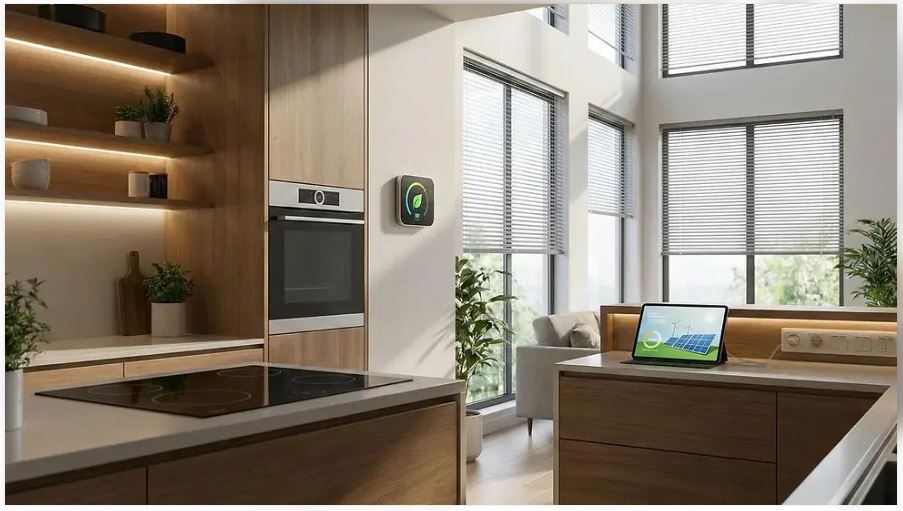
The kitchen has always been the heart of the home, but today’s kitchens are becoming smarter, more efficient, and more connected than ever before. From intelligent appliances and voice-controlled lighting to hidden charging stations and automated ventilation, smart technology is transforming the way we cook, entertain, and live.
However, creating a smart kitchen is not simply about filling the room with the latest gadgets. The real secret lies in thoughtful integration—choosing technology that enhances everyday life while preserving the beauty, comfort, and functionality of the space.
Whether you’re planning a complete kitchen renovation, designing a luxury home, or upgrading an existing kitchen, this guide explores 12 practical ways to integrate smart technology into modern kitchen design, with step-by-step ideas and professional design considerations.
1. Start With a Smart Kitchen Design Plan

Every successful smart kitchen begins with a well-considered layout. Before choosing appliances or digital features, think about how the kitchen will be used throughout the day.
A family kitchen may benefit from automated lighting, energy-efficient appliances, and smart grocery management. A passionate home cook might prefer a connected oven, precision cooking equipment, and hands-free controls.
Step-by-step planning process
- Identify your kitchen’s primary activities, including cooking, cleaning, entertaining, and storage.
- Decide which daily tasks could genuinely benefit from automation.
- Establish a realistic budget for smart appliances, electrical work, and connectivity.
- Plan the placement of outlets, data connections, and control panels.
- Choose technology that works together without requiring numerous separate applications.
Designer’s tip
Prioritise a functional layout before investing in smart features. Technology should complement good kitchen design, not compensate for poor planning.
2. Integrate Smart Appliances Into Cabinetry

Smart appliances are among the most noticeable innovations in modern kitchen design.
Connected ovens, refrigerators, dishwashers, and coffee machines can offer useful features such as remote status updates, programmable settings, and maintenance notifications.
The challenge for designers is incorporating these appliances without creating a cluttered or overly technological appearance.
How to integrate smart appliances
- Select appliances based on cooking habits and practical features rather than novelty.
- Check cabinet dimensions, ventilation clearances, and electrical requirements.
- Use built-in appliances to maintain clean cabinet lines.
- Consider matching finishes for a coordinated appearance.
- Test the appliance’s manual controls and connected features before finalising the design.
Smart appliance ideas
- Connected ovens: Cooking alerts, guided programmes, and temperature monitoring.
- Smart refrigerators: Temperature alerts, inventory features on some models, and energy information.
- Connected dishwashers: Cycle notifications and maintenance reminders.
- Smart coffee machines: Customisable drink settings and scheduled preparation on supported models.
Designer’s tip
Choose appliances that remain fully usable without an internet connection. A smart kitchen should still function when Wi-Fi is unavailable.
3. Design Intelligent Kitchen Lighting

Lighting is one of the most effective ways to introduce smart technology into a kitchen.
A carefully designed lighting system improves visibility, creates atmosphere, and allows the room to adapt to different activities.
Rather than relying on one overhead fixture, professional designers use layered lighting.
Step-by-step lighting integration
- Install task lighting beneath wall cabinets to illuminate food preparation areas.
- Add ambient ceiling lighting for overall brightness.
- Incorporate decorative pendant lights above the island or dining area.
- Select compatible smart dimmers, switches, or lighting controls.
- Create lighting scenes for cooking, dining, entertaining, and nighttime use.
Recommended lighting scenes
| Scene | Lighting effect |
|---|---|
| Cooking | Bright, even task lighting |
| Dining | Warm, softly dimmed lighting |
| Entertaining | Balanced accent and ambient lighting |
| Nighttime | Low-level pathway illumination |
| Cleaning | Full, clear illumination |
Designer’s tip
Use a consistent colour temperature across nearby fixtures whenever possible. Warm white lighting often creates a welcoming residential atmosphere, while adjustable white lighting provides greater flexibility.
4. Add Touchless Faucets and Smart Water Monitoring

A touchless kitchen faucet combines convenience with contemporary design.
Motion-activated or sensor-operated faucets can make everyday tasks easier, particularly when hands are covered in flour, dough, or food ingredients.
Some advanced models offer preset water quantities or temperature controls, depending on the manufacturer.
How to incorporate smart water technology
- Choose a faucet with a finish that complements your kitchen hardware.
- Confirm compatibility with the sink, countertop, and available space.
- Check power requirements, including batteries or mains connections.
- Consider installing water-leak sensors beneath the sink and dishwasher.
- Where appropriate, integrate a compatible automatic water shutoff system.
Designer’s tip
Place leak sensors in concealed areas where plumbing failures might otherwise go unnoticed. Early detection can help reduce water damage.
5. Create a Voice-Controlled Kitchen

Voice assistants can provide hands-free convenience while cooking.
Instead of touching a phone with messy hands, homeowners can use compatible voice assistants to set timers, manage shopping lists, play music, or control connected lighting.
The key is making voice technology useful without allowing it to dominate the kitchen’s visual design.
Step-by-step voice integration
- Select a voice assistant compatible with your preferred smart-home devices.
- Position the speaker away from sinks, cooking heat, and excessive steam.
- Connect compatible lighting and appliances.
- Set up simple routines for frequently used activities.
- Test commands in normal kitchen conditions, including while extractor fans are running.
Useful voice commands
- “Set a timer for 15 minutes.”
- “Turn on the kitchen lights.”
- “Add olive oil to my shopping list.”
- “Play my cooking playlist.”
Designer’s tip
Choose a discreet location with good microphone coverage. Avoid placing speakers directly beside noisy appliances.
6. Incorporate Hidden Charging Stations

Modern kitchens often serve as informal workspaces, homework stations, and family gathering areas.
Phones, tablets, and other devices naturally find their way onto countertops, creating visible cables and clutter.
A thoughtfully positioned charging station can solve this problem.
How to design a charging area
- Identify a convenient location away from wet and hot work zones.
- Consider a dedicated charging drawer, recessed outlet, or accessible USB-C charging point.
- Include sufficient ventilation around powered devices.
- Use cable-management accessories to keep cords organised.
- Ensure electrical components are installed in accordance with local regulations and manufacturer requirements.
Designer’s tip
For concealed charging drawers, use a purpose-designed, approved electrical system. Do not place improvised extension leads or overheating devices inside enclosed cabinetry.
7. Use Smart Ventilation for a Fresher Kitchen

Good ventilation is essential for a comfortable and functional kitchen.
Cooking releases moisture, odours, grease particles, and airborne pollutants. Smart ventilation systems can help manage these conditions more conveniently.
Some extractor hoods include automatic fan-speed adjustments, humidity sensing, or communication with compatible cooktops.
Step-by-step ventilation planning
- Choose an extractor hood appropriate for the cooking appliance and kitchen layout.
- Calculate ventilation requirements based on the manufacturer’s recommendations and local building standards.
- Plan ducting routes early in the renovation process.
- Consider automatic fan controls or compatible sensor-based operation.
- Ensure filters and internal components remain accessible for cleaning.
Designer’s tip
Where practical and permitted, externally ducted extraction is often preferable for removing cooking pollutants and moisture. Smart controls should support, rather than replace, adequate ventilation.
8. Upgrade to Smart Induction Cooking

Induction cooking has become a popular choice for contemporary kitchens because it offers responsive heat control, easy-to-clean surfaces, and efficient energy transfer to compatible cookware.
Some advanced induction cooktops also include connected controls, guided cooking features, and automatic pan detection.
How to plan an induction cooking zone
- Confirm the electrical supply can support the selected cooktop.
- Check the dimensions and installation clearances.
- Choose compatible magnetic cookware.
- Position the cooking area near useful preparation surfaces.
- Provide adequate extraction above the cooking zone.
Designer’s tip
For a minimalist appearance, consider a flush-mounted induction cooktop where the countertop material and appliance manufacturer permit it.
Induction surfaces can still become hot from contact with cookware, so normal cooking precautions remain important.
9. Introduce Smart Storage and Pantry Organisation

A well-organised kitchen saves time, reduces frustration, and makes cooking more enjoyable.
Smart storage does not always require expensive electronics. Sometimes the most effective solution combines intelligent cabinetry with simple digital tools.
Smart pantry ideas
- Motion-activated cabinet lighting.
- Pull-out pantry shelves.
- Digital shopping lists.
- Food inventory applications.
- Clearly organised storage zones.
- Temperature and humidity monitoring where useful.
Step-by-step pantry upgrade
- Divide the pantry into categories such as grains, baking supplies, snacks, and canned foods.
- Install pull-out shelves or organisers for better accessibility.
- Add low-energy LED lighting.
- Use a shared digital shopping list to track frequently purchased items.
- Review stored food regularly to reduce waste.
Designer’s tip
Avoid relying entirely on automated inventory systems. Clear organisation and regular checks are often more dependable.
10. Install Smart Energy Monitoring

Energy efficiency is an increasingly important part of kitchen design.
Smart monitoring technology can help homeowners understand electricity consumption, identify energy-intensive appliances, and adjust everyday habits.
Depending on the equipment, energy information may be available through appliance applications, smart plugs, or a home energy monitoring system.
How to create an energy-conscious kitchen
- Choose energy-efficient appliances with suitable capacity.
- Compare energy labels and estimated operating costs.
- Use compatible monitoring devices to track electricity consumption.
- Create practical schedules for appliances that support them.
- Review energy data and adjust habits where useful.
Designer’s tip
Never use an ordinary smart plug for a high-power cooking appliance unless it is explicitly rated and approved for that specific application. Fixed electrical equipment should be installed by a qualified professional.
11. Create a Connected Kitchen Command Centre

A kitchen command centre can make everyday household management more convenient.
A wall-mounted tablet or dedicated smart-home display can bring together selected controls and useful information in one place.
Depending on the system, homeowners may access lighting scenes, calendars, shopping lists, appliance status, and energy information.
Step-by-step command centre design
- Select a convenient viewing position away from direct splashes and heat.
- Choose a display with appropriate smart-home compatibility.
- Plan safe power and cable routing.
- Configure a simple dashboard with frequently used functions.
- Set privacy permissions and security updates.
Designer’s tip
Keep the interface simple. The best command centre displays essential information without becoming a visual distraction.
12. Future-Proof Your Smart Kitchen

Technology evolves quickly, but a well-designed kitchen should remain beautiful and functional for many years.
Future-proofing means making thoughtful decisions today that allow easier upgrades tomorrow.
How to future-proof your design
- Include accessible electrical outlets in practical locations.
- Plan strong, reliable Wi-Fi coverage throughout the kitchen.
- Consider wired networking for compatible fixed devices.
- Choose products supporting widely adopted interoperability standards, such as Matter, where relevant.
- Keep important appliance functions available through physical controls.
- Ensure electrical connections, filters, and service panels remain accessible.
- Select timeless cabinetry and durable surfaces that will outlast changing technology trends.
Designer’s tip
Avoid making the entire kitchen dependent on a single app or cloud service. Technology should be replaceable without requiring major reconstruction.
How to Design a Smart Kitchen on Different Budgets
You don’t need a luxury renovation to enjoy the benefits of a connected kitchen.
| Budget level | Smart technology priorities |
|---|---|
| Budget-friendly | Smart bulbs, voice assistant, leak sensors, digital shopping lists |
| Mid-range | Under-cabinet smart lighting, selected connected appliances, touchless faucet |
| Premium | Integrated appliance suite, automated ventilation, energy monitoring, custom lighting scenes |
| Luxury | Coordinated home automation, bespoke cabinetry integration, centralised controls, advanced connected appliances |
The smartest investment is not necessarily the most expensive one. Focus on features that genuinely improve how you use your kitchen.
Common Smart Kitchen Design Mistakes to Avoid
A connected kitchen should simplify daily life, not make ordinary tasks more complicated.
Some common mistakes include purchasing incompatible devices, overlooking Wi-Fi coverage, hiding important maintenance access, and selecting technology purely for its appearance.
Other issues arise when homeowners install too many separate applications or rely on connected functions for essential kitchen operations.
To avoid these problems, plan the technology alongside the kitchen layout and involve qualified electrical, plumbing, and cabinetry professionals whenever necessary.
Frequently Asked Questions
What is a smart kitchen?
A smart kitchen uses connected appliances, intelligent lighting, sensors, and automation systems to improve convenience, efficiency, and everyday functionality.
Is smart kitchen technology expensive?
Not necessarily. Simple additions such as smart lighting, leak detectors, and digital shopping lists can be relatively affordable. Fully integrated systems require a larger investment.
Can smart technology be added to an existing kitchen?
Yes. Many upgrades, including compatible smart bulbs, sensors, and countertop appliances, can be introduced without major renovation. Built-in systems may require electrical or cabinetry modifications.
Are smart kitchens energy-efficient?
They can be. Energy monitoring, efficient appliances, and thoughtful automation may reduce unnecessary consumption. Actual savings depend on the equipment and how it is used.
What is the most important smart kitchen feature?
There is no universal answer. Good lighting, effective ventilation, safe electrical planning, and practical appliance controls usually offer more lasting value than novelty features.
How can I protect my smart kitchen from cybersecurity risks?
Use strong, unique passwords, enable multifactor authentication where available, keep firmware updated, and review connected-device permissions. A separate network for smart-home devices can provide additional protection.
Conclusion: Designing a Kitchen That’s Smart, Stylish, and Timeless
The future of kitchen design is not about filling every surface with screens or making every appliance voice-controlled.
It is about creating a beautiful, intuitive space where technology works quietly in the background.
Thoughtfully integrated lighting, connected appliances, intelligent storage, smart ventilation, and energy monitoring can make the kitchen more comfortable, efficient, and enjoyable.
The most successful smart kitchens balance innovation with timeless design. They remain welcoming places to prepare meals, share conversations, and spend time with family.
A truly smart kitchen isn’t defined by how much technology it contains, but by how naturally that technology improves everyday life.